How AI is Transforming Educational Content Creation While Human Expertise Remains Essential
ASHOK KUMAR T
|
JUNE 12, 2026
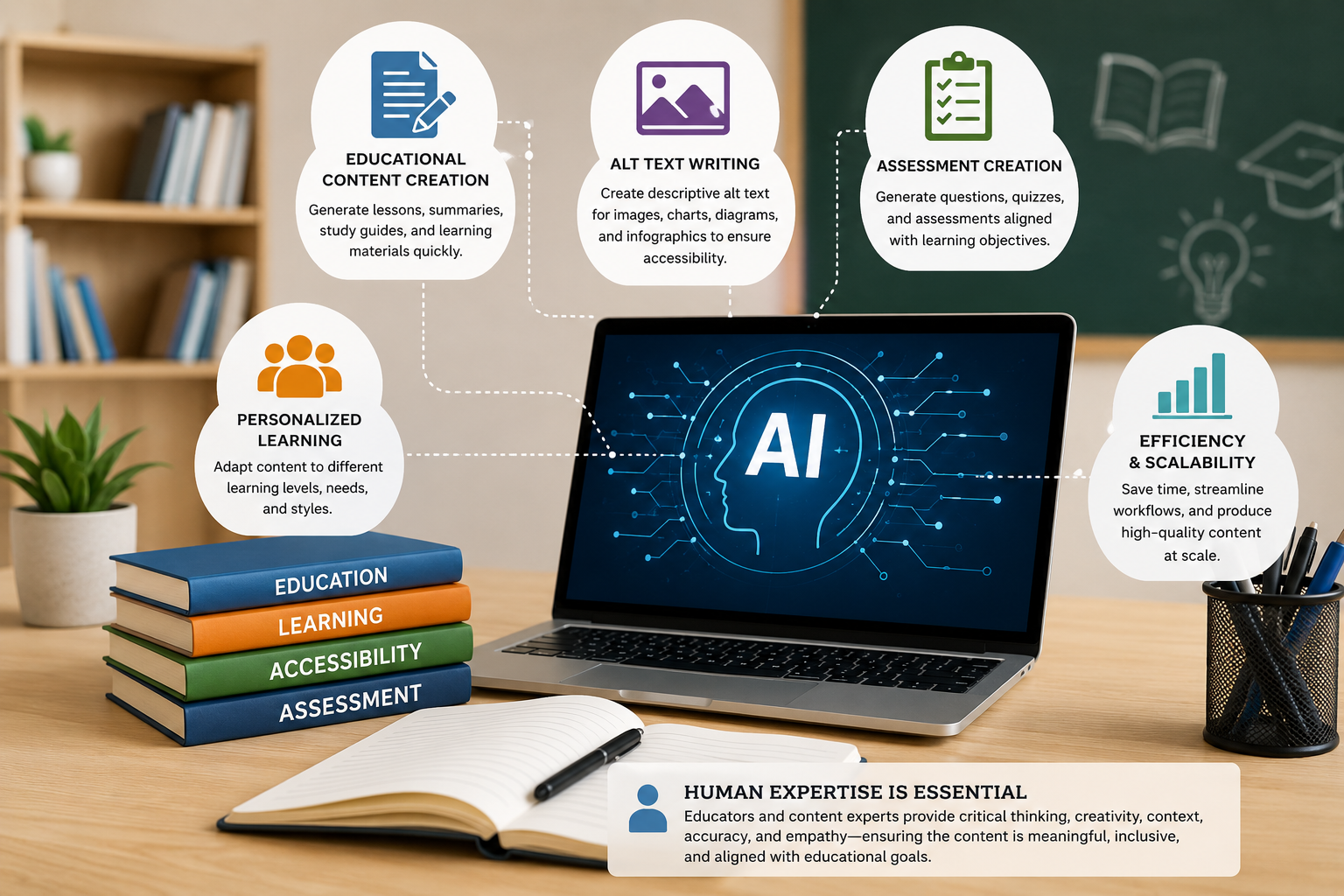
Artificial Intelligence is transforming educational content creation by supporting tasks such as content development, assessment creation, and accessibility through alt text writing. While AI improves efficiency and scalability, human expertise remains essential to ensure quality, accuracy, and meaningful learning outcomes.
Artificial Intelligence has rapidly become a valuable asset in educational content development. From creating learning materials and generating assessments to supporting accessibility initiatives through alt text writing, AI-powered tools are helping educational publishers, instructional designers, and educators work more efficiently than ever before. By automating repetitive tasks and accelerating content production, AI enables teams to focus on delivering engaging and impactful learning experiences. However, despite these advancements, AI functions best as a support tool rather than a replacement for human expertise.
One of the most significant contributions of AI is its ability to streamline educational content creation. AI can generate lesson plans, study guides, summaries, learning objectives, and instructional content based on a given topic. It can adapt material for different grade levels, simplify complex concepts, and provide multiple versions of explanations to suit diverse learners. Educational publishers can use AI to accelerate the development of textbooks, e-learning modules, and supplementary learning resources. This reduces development time and allows content creators to focus on curriculum alignment, learner engagement, and instructional effectiveness.
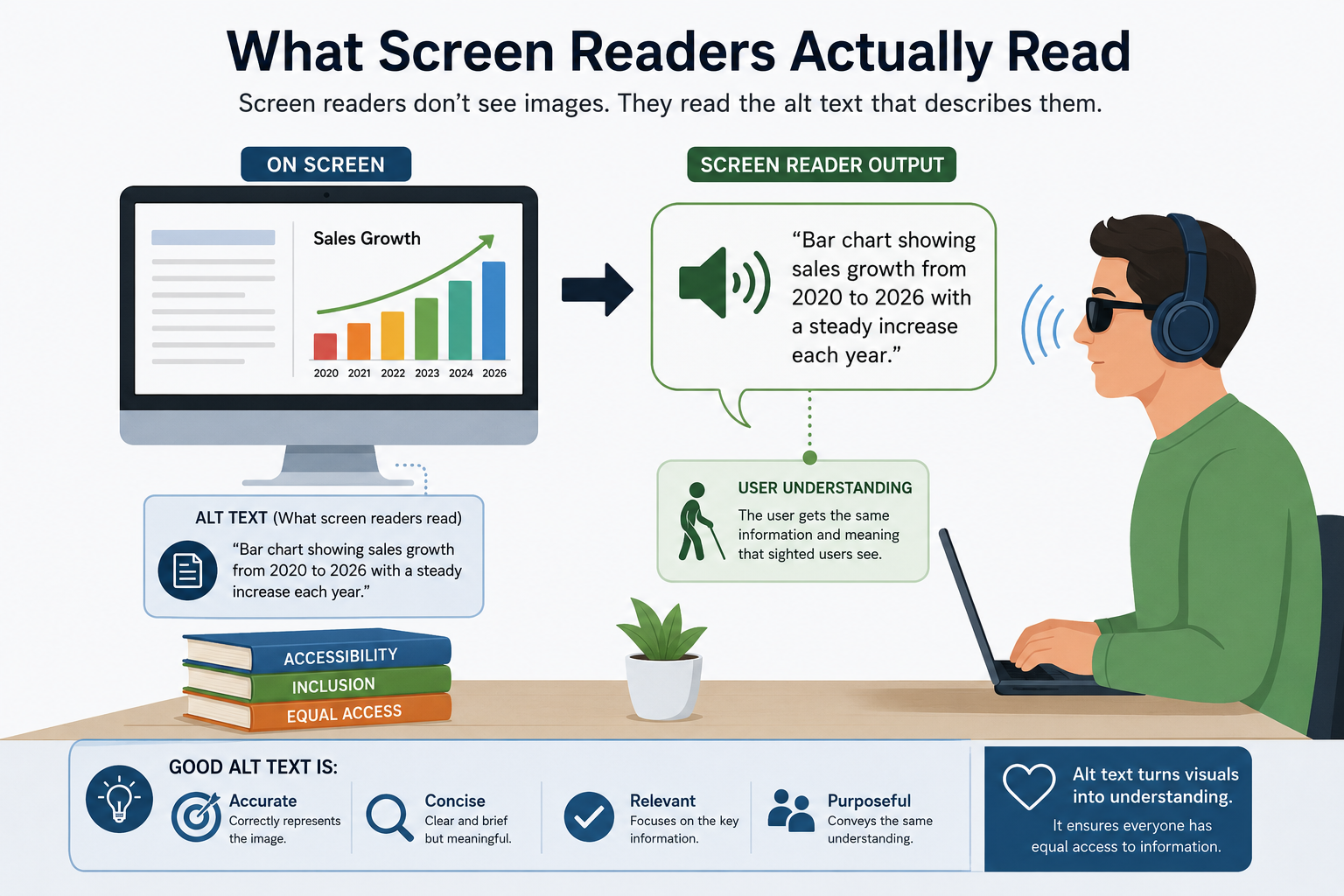
AI also plays an increasingly important role in accessibility. Educational organizations are responsible for ensuring that learning materials are accessible to all learners, including those who rely on screen readers and assistive technologies. AI can assist in drafting alt text descriptions for photographs, illustrations, diagrams, charts, graphs, and flowcharts. It can identify key visual elements and generate initial descriptions that communicate the educational purpose of an image. For large-scale publishing projects involving thousands of figures, AI can significantly reduce the time required to create accessibility metadata. However, human reviewers remain essential because educational visuals often contain subject-specific nuances, complex relationships, and contextual information that AI may overlook. Experts ensure that alt text accurately conveys the learning objectives of the visual and complies with accessibility standards.
Assessment creation is another area where AI delivers substantial value. Educators and instructional designers can use AI to generate multiple-choice questions, true-or-false items, short-answer questions, case studies, discussion prompts, and formative assessments. AI can create question banks based on specific learning outcomes and even suggest varying difficulty levels to support differentiated instruction. This capability helps reduce the time spent creating assessments while providing learners with a broader range of practice opportunities. Nevertheless, human oversight is critical to verify accuracy, eliminate ambiguity, maintain academic rigor, and ensure that assessments genuinely measure the intended learning objectives.
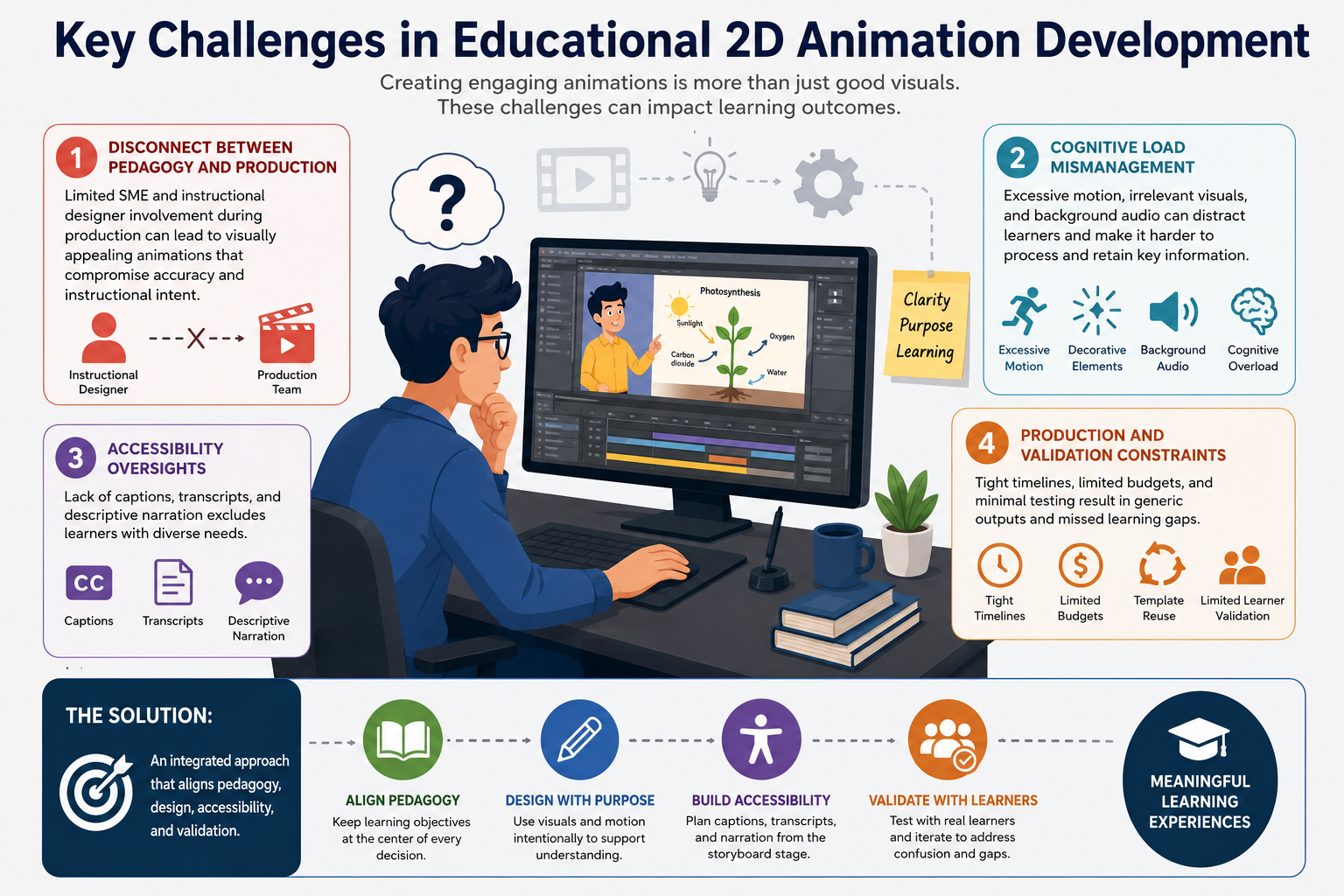
Despite its advantages, AI has limitations that prevent it from replacing human professionals. Effective educational content requires pedagogical expertise, critical thinking, creativity, and an understanding of learner needs. Human subject matter experts determine what information is most relevant, identify misconceptions learners may encounter, and design meaningful learning experiences. They also evaluate the quality, accuracy, and appropriateness of AI-generated content. Without this oversight, educational materials may contain factual inaccuracies, incomplete explanations, or assessment items that fail to evaluate higher-order thinking skills.
The future of educational content development lies in collaboration between AI and human expertise. AI can accelerate research, content drafting, alt text generation, and assessment creation, allowing educators and content developers to work more efficiently. Human professionals, in turn, provide the judgment, contextual understanding, and instructional design expertise needed to ensure quality and effectiveness. By combining the strengths of both, educational organizations can create accessible, engaging, and high-quality learning experiences that meet the needs of diverse learners while maintaining the highest standards of educational excellence.
One of the most significant contributions of AI is its ability to streamline educational content creation. AI can generate lesson plans, study guides, summaries, learning objectives, and instructional content based on a given topic. It can adapt material for different grade levels, simplify complex concepts, and provide multiple versions of explanations to suit diverse learners. Educational publishers can use AI to accelerate the development of textbooks, e-learning modules, and supplementary learning resources. This reduces development time and allows content creators to focus on curriculum alignment, learner engagement, and instructional effectiveness.
AI also plays an increasingly important role in accessibility. Educational organizations are responsible for ensuring that learning materials are accessible to all learners, including those who rely on screen readers and assistive technologies. AI can assist in drafting alt text descriptions for photographs, illustrations, diagrams, charts, graphs, and flowcharts. It can identify key visual elements and generate initial descriptions that communicate the educational purpose of an image. For large-scale publishing projects involving thousands of figures, AI can significantly reduce the time required to create accessibility metadata. However, human reviewers remain essential because educational visuals often contain subject-specific nuances, complex relationships, and contextual information that AI may overlook. Experts ensure that alt text accurately conveys the learning objectives of the visual and complies with accessibility standards.
Assessment creation is another area where AI delivers substantial value. Educators and instructional designers can use AI to generate multiple-choice questions, true-or-false items, short-answer questions, case studies, discussion prompts, and formative assessments. AI can create question banks based on specific learning outcomes and even suggest varying difficulty levels to support differentiated instruction. This capability helps reduce the time spent creating assessments while providing learners with a broader range of practice opportunities. Nevertheless, human oversight is critical to verify accuracy, eliminate ambiguity, maintain academic rigor, and ensure that assessments genuinely measure the intended learning objectives.
Despite its advantages, AI has limitations that prevent it from replacing human professionals. Effective educational content requires pedagogical expertise, critical thinking, creativity, and an understanding of learner needs. Human subject matter experts determine what information is most relevant, identify misconceptions learners may encounter, and design meaningful learning experiences. They also evaluate the quality, accuracy, and appropriateness of AI-generated content. Without this oversight, educational materials may contain factual inaccuracies, incomplete explanations, or assessment items that fail to evaluate higher-order thinking skills.
The future of educational content development lies in collaboration between AI and human expertise. AI can accelerate research, content drafting, alt text generation, and assessment creation, allowing educators and content developers to work more efficiently. Human professionals, in turn, provide the judgment, contextual understanding, and instructional design expertise needed to ensure quality and effectiveness. By combining the strengths of both, educational organizations can create accessible, engaging, and high-quality learning experiences that meet the needs of diverse learners while maintaining the highest standards of educational excellence.